Mechanical Logic: Smartivity DIY Wooden Pinball Audit
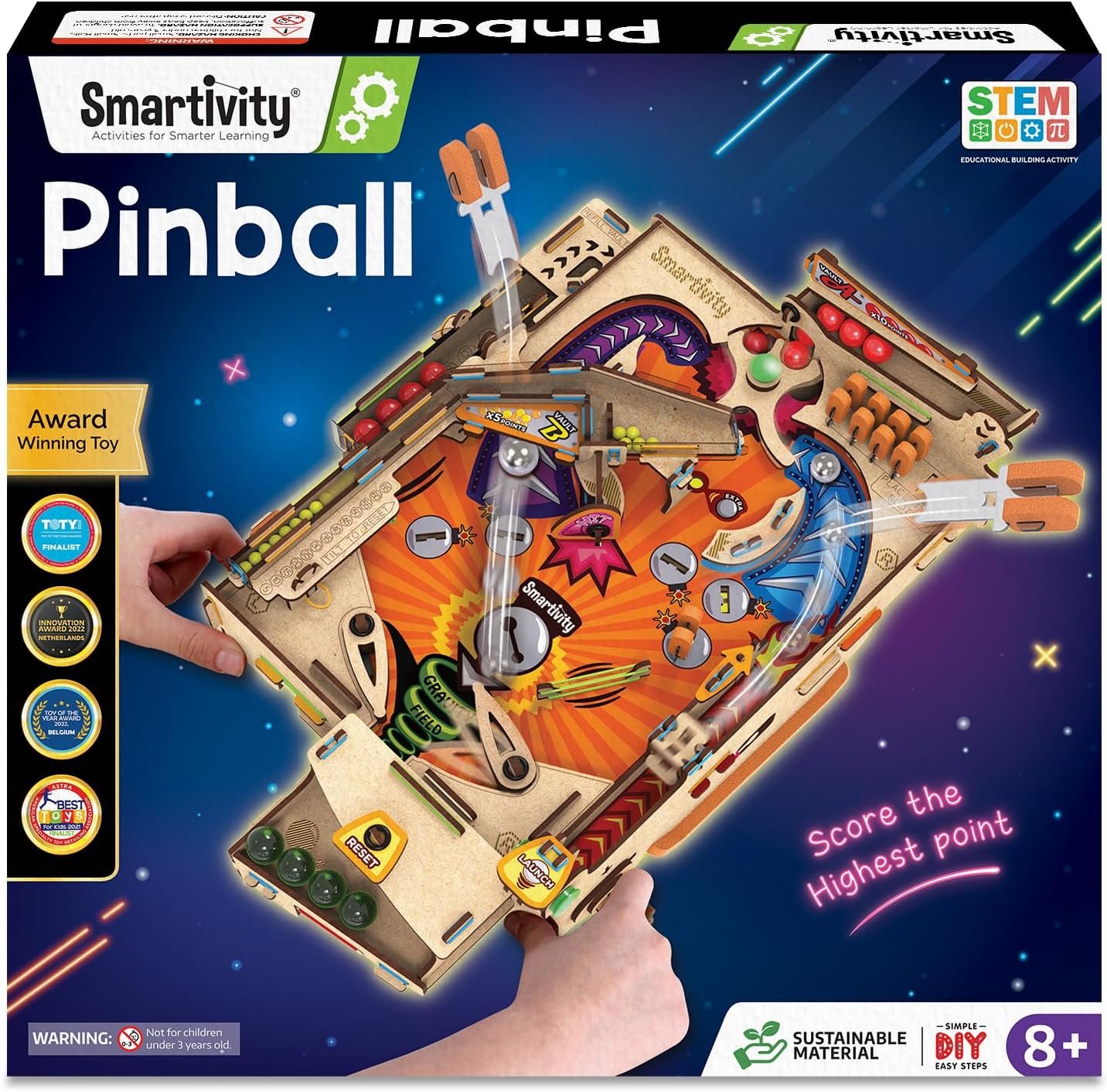
The modern childhood experience is often sequestrated by high-resolution screens, leaving very little room for tactile, mechanical understanding. If you want to teach a child about kinetic energy or momentum, a YouTube video is a poor substitute for the actual physical handshake of a spring-loaded plunger hitting a steel ball. The Smartivity DIY Wooden Pinball Machine offers an engineered alternative—a screen-free deployment that forces the brain to interact with real-world physics. It just works.

Chassis Integrity: Sustainable Engineering
The structural telemetry of this kit relies on precisely laser-cut engineered wood. Unlike plastic toys that lack mechanical feedback, this wooden chassis provides a sturdy, tactile experience. The assembly process is effectively a lesson in structural integrity; each piece must be seated correctly to ensure the levers and flippers operate without excessive friction. For Canadian families looking for sustainable alternatives, this eco-friendly build avoids the plastic-waste sequestration common in the toy industry.

STEM Handshake: Physics in Motion
Once the build is complete, the toy becomes a functional laboratory for kinetic energy and angles. The player must calculate the force required at the plunger to send the ball into specific scoring zones, effectively practicing real-time physics calculations. We noticed that the movement of the flippers provides a direct lesson in lever-logic and torque. It’s a brilliant way to bridge the gap between classroom theory and operative mechanical reality without the need for a digital interface.

Logistics and Maintenance: Lifetime Replacement
Building a complex mechanical unit can be stressful if a single component fails. Smartivity sequestrates this worry by offering a lifetime supply of replacement parts. If a wooden tab snaps or a rubber band loses its tension-telemetry during the 2-hour assembly, the project isn’t dead. This level of support is rare and professionalizes the entire experience, ensuring that the machine remains a functional piece of hardware in the home for years rather than becoming a decorative dust-collector.

Engineering Pros
- Hands-on STEM Telemetry covering levers, force, and motion.
- Eco-friendly chassis avoids plastic sequestration in the home.
- Precise laser-cut fitment for high structural integrity.
- Lifetime replacement parts ensure long-term operational readiness.
- Promotes screen-free cognitive development and fine motor skills.
Operational Cons
- Setup Latenz: Assembly takes 1–2 hours, requiring significant focus.
- Material Fragility: Wooden tabs require careful handling during deployment.
- Guidance Requirement: Younger users (under 10) will likely need an adult handshake.
Consumer Sentiment (Data Analysis)
Aggregated user telemetry from parents and educators identifies the Smartivity Pinball Machine as a “highly rewarding weekend project.” Buyers frequently praise the clarity of the manual, noting that it successfully isolates the child’s attention away from tablets. While some mention that the wood can be “fiddly” in tight corners, the consensus is that the pride of playing a game you built yourself creates a unique emotional handshake that digital games simply cannot replicate. It’s a top-tier gift for the curious Canadian kid.

Technical Specifications
| Chassis Material | Premium Laser-Cut Engineered Wood |
| Learning Logic | STEM (Physics, Levers, Kinetic Energy) |
| Target Demographic | Ages 8–14 (Operational Readiness Varies) |
| Assembly Time | 60 – 120 Minutes (Average Deployment) |
| Support Infrastructure | Lifetime Replacement Parts (Manufacturer Backed) |
| Certification | Eco-Friendly / Screen-Free Certified |